
Social events
Party Catering for 30–50 Guests in Chester County
Thirty to fifty guests is a wonderfully social size: enough people to create energy, still intimate enough for the food and service to feel personal.
The short answer
Start with the whole experience.
For 30–50 guests, choose one clear service style, build a focused menu with enough variety for dietary needs, and plan the room around natural guest flow. Food quantities, staff, rentals, and bar service should all be based on the event length and how guests will eat—not guest count alone.
02
Pick one service style that fits the room
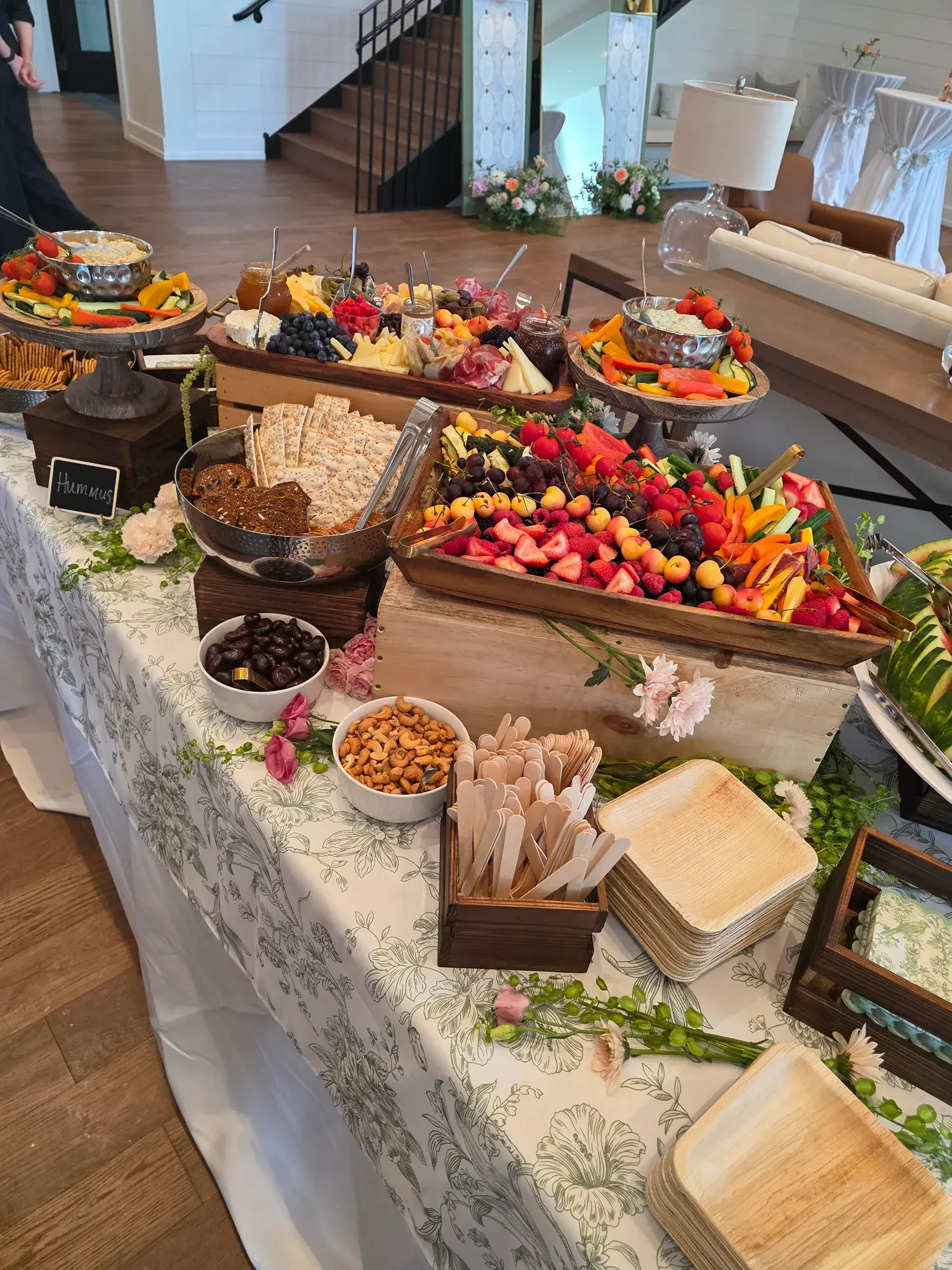
A cocktail-style party with passed bites and a grazing table keeps guests moving. A buffet works well for birthdays, graduations, anniversaries, and family celebrations when there is space for a clean line. Stations create a sense of abundance and give guests reasons to circulate. A plated dinner feels intimate and celebratory when everyone can be seated comfortably.
Look at the room before deciding. A buffet needs approach space, plate pickup, room to return for seconds, and a place for used dishes. Passed service needs clear walking paths. Seated service needs enough room behind chairs for staff to move safely.
- 01Open house: replenished displays and easy-to-eat portions
- 02Shower or brunch: buffet, family-style, or light plated service
- 03Milestone birthday: passed welcome bites followed by dinner
- 04Graduation: flexible buffet that handles staggered arrivals
- 05Anniversary: seated dinner or polished cocktail reception

03
Why portion planning is not a simple calculator
Online calculators can offer a rough starting point, but caterers plan a menu as a whole. Several appetizers, for example, are portioned differently when followed by dinner than when they are the entire meal. A buffet needs enough of every item to feel available while also accounting for how guests combine dishes.
Children, dietary meals, late arrivals, and the event schedule all matter. Tell the caterer how the invitation describes the food—light bites, brunch, dinner, or dessert—so guests and kitchen are planning for the same experience.
The invitation sets an expectation. If guests are told dinner will be served, the menu and quantities need to carry the full evening.
04
Decide how much help the host should have
Delivery may be right for a casual gathering when the host has people ready to set, monitor, clear, and clean. Full service changes the host’s role. Staff can welcome vendors, arrange food, replenish, clear glassware, manage trash, and reset the room while the host stays with guests.
For a party of 30–50, even one or two logistical bottlenecks become visible. Think about the front door, coat area, bar, buffet, restrooms, and seating. A service plan should keep those zones from competing with one another.
05
Give drinks their own plan
Water, ice, cups, coffee, mixers, garnishes, and glassware take more space than many hosts expect. Put the beverage area away from the food line so one does not block the other. Offer an appealing alcohol-free option instead of treating it as a substitute.
If alcohol is served, professional bartending lets someone monitor pace, keep the station clean, and manage supplies. Dragonfly’s RAMP-certified bartending can be coordinated with the catering proposal; clients provide the alcohol while the service plan covers the rest of the bar experience.
06
Host at home, at a venue, or at Dragonfly
A private home can feel especially warm, but evaluate parking, restrooms, kitchen access, furniture, weather backup, and what needs to be moved before the event. A rented venue may solve those issues while adding rules, access windows, and rental requirements.
Dragonfly’s Downingtown event space hosts intimate gatherings of up to 50 guests, including showers, dinners, workshops, and celebrations. Dragonfly also works at private homes, offices, and venues across Chester County, the Main Line, and select nearby communities.
07
A simple checklist for a 30–50 person party
Start with the non-negotiables: date, location, approximate count, occasion, and budget context. Then decide whether the event is primarily a meal or a social gathering with food. That answer will make the menu, seating, and timing much easier to shape.
- 01Confirm a comfortable capacity, not only the legal maximum
- 02Map food, drinks, seating, and guest movement
- 03Collect dietary needs before the final count
- 04Choose who handles setup, replenishment, clearing, and cleanup
- 05Create a weather plan for any outdoor portion
- 06Give vendors one onsite contact and a realistic arrival window
Good to know
Frequently asked questions
The amount depends on event length, time of day, service style, menu variety, alcohol service, and whether the food is a full meal. A caterer should portion the entire menu together rather than applying one number to every dish.